Fruit Pectin: Choose the Right Product for Your Jam
Understand regular, low-sugar, powdered, and liquid pectin—and why a good set and safe storage are separate questions.
Pectin helps a fruit mixture form a gel. It is the reason a spoonful can hold together as jam rather than flow like a sauce. But buying pectin is only the beginning: the type of fruit, sugar, acidity, amount of pectin, and method all need to work together.
The simplest shopping rule is choose the recipe first, then buy the exact kind of pectin it requests. A package that looks similar may call for different quantities or a different order of mixing.
Compare the main options
| Product or approach | What to look for | Main limit |
|---|---|---|
| Regular powdered pectin | A recipe written for that powdered product | Do not freely reduce the specified sugar |
| Regular liquid pectin | A recipe written for liquid pectin | Not a direct swap for powdered pectin |
| Low- or no-sugar-needed pectin | The exact package's recipe and directions | Formulations and methods vary |
| No added pectin | A recipe designed around the fruit and cooking method | Texture can differ from a pectin-added jam |
The National Center for Home Food Preservation explains that successful gelled products depend on the balance of fruit, pectin, acid, and sugar. Its guidance specifically distinguishes liquid from powdered pectin; they are not interchangeable in its recipes. NCHFP ingredient guidance
Read the package closely
Check the full product name, package weight, expiration date, and whether the instructions describe a cooked jam or a freezer jam. Store dry pectin in a cool, dry place and use it within the manufacturer's recommended period.
A recipe calling for “one package” depends on the package that recipe was developed for. Do not assume a bulk container, a small pouch, and a box all contain the same amount. If the manufacturer gives a measured equivalent, follow that direction rather than estimating by appearance.
NCHFP notes that regular pectin relies on the specified sugar balance, while reduced-sugar products need an appropriate modified pectin and matching instructions. Reducing sugar in a standard recipe can change both the set and the product's keeping qualities. University of Georgia sweet-spread guidance
Plan the texture you actually want
A loose fruit spread can be excellent on yogurt, pancakes, or toast. It does not need to mimic a firm supermarket jelly to be enjoyable. If you want an easy refrigerated topping, choose a recipe meant for that purpose and accept its stated texture.
For a more structured jam, measure the prepared fruit as directed. “Two cups crushed berries” is not the same preparation as measuring two cups of whole berries and crushing them afterward. Set out the measured ingredients before cooking so you are not trying to correct the balance while the mixture boils.
Kitchen note: Write the pectin's full name on your recipe notes. That makes it easier to repeat the result or understand why a different product behaved differently.
Avoid doubling a jam batch unless the tested recipe explicitly allows it. A larger panful changes how the mixture heats and loses water. NCHFP explains that prolonged cooking of larger jelly batches can harm flavor and gel quality. NCHFP jam and jelly FAQs
A set does not prove shelf stability
Pectin controls texture; it does not replace a safe preservation process. A thick jam in a jar is not automatically suitable for pantry storage, and a lid that appears sealed does not validate an improvised recipe.
For room-temperature storage, use a tested canning recipe and follow its jar size, acid, sugar, processing, and altitude instructions. For a refrigerator or freezer recipe, use that storage method and its stated time limit. Keep opened jam refrigerated. If a jar shows mold or other spoilage, discard all of it rather than removing the visible patch. NCHFP storage guidance
If it does not set
Give the product the cooling or setting time in its instructions. If it remains loose, consult the pectin manufacturer's troubleshooting or NCHFP's tested remaking directions. Adding an arbitrary extra spoonful is unlikely to produce a predictable result.
Start with strawberry refrigerator spread or blueberry lemon fruit spread, and read our jam-safety guide before choosing between a fresh spread and a canning project.
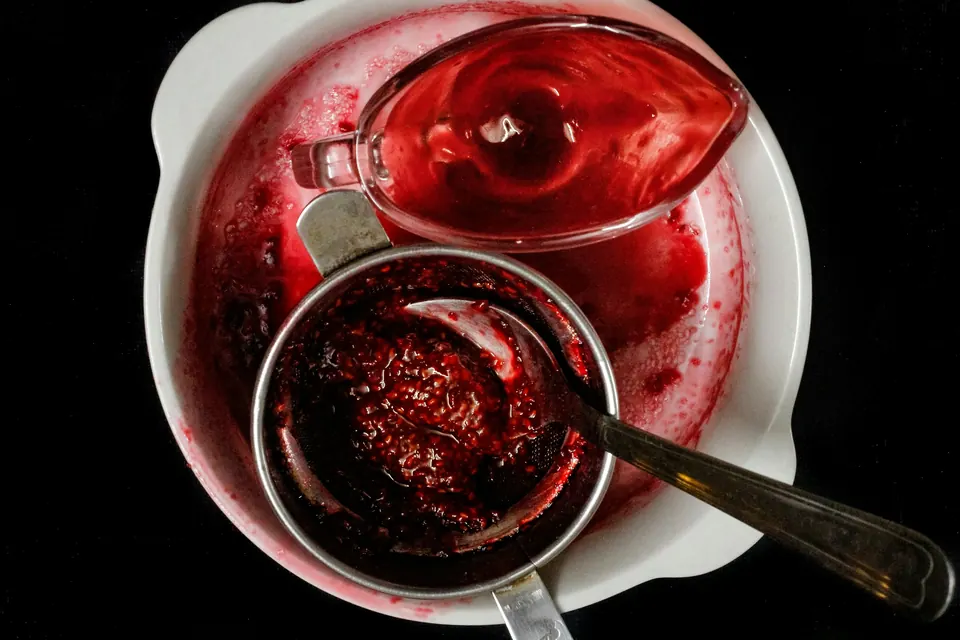
Photo shows the style of the dish and may differ from this exact recipe.